![]()

Criminal possession of a firearm under Penal Law § 265.01-b is a Class E felony. The statute applies when a person possesses a firearm without lawful authorization. This charge can apply even when the firearm was not fired. The prosecution may rely on actual or constructive possession.
Constructive possession can become an important issue when a gun is found in a vehicle, residence, or shared location. A knowlegable NYC gun charge lawyer will examine whether the defendant actually knew about the firearm. The defense can also investigate whether the firearm was legally possessed under an applicable license or statutory exception.
Criminal possession of a weapon in the fourth degree is a Class A misdemeanor. Penal Law § 265.01 includes possession of a firearm among the conduct covered by this offense. This charge can expose a defendant to criminal consequences even when the prosecution cannot establish a more serious felony. The precise subsection charged is important. Other circumstances that involve dangerous weapons also fall under this statute.
Criminal possession of a weapon in the third degree is a Class D felony. Several circumstances can elevate possession to this offense. One provision applies when a person possesses a firearm after a prior conviction. Another applies when the person possesses a firearm after a felony or qualifying Class A misdemeanor conviction within the preceding five years.
The statute also covers situations involving three or more firearms. Other circumstances include possession of an assault weapon, disguised gun, defaced firearm, or large-capacity ammunition feeding device. An unloaded firearm combined with certain violent felony or drug trafficking conduct also creates third-degree weapon possession liability.
Criminal possession of a weapon in the second degree is a Class C felony. The statute covers several serious circumstances involving firearms. These circumstances include possession of a loaded firearm with unlawful intent. The statute also addresses machine guns, disguised guns, and possession of five or more firearms. Possession that occurs in a person’s home or business may be treated differently under the statute.
Criminal possession of a weapon in the first degree is a Class B felony. The offense includes possession of an explosive substance with unlawful intent. It also includes possession of ten or more firearms. Because this offense involves extremely serious allegations, early legal representation is critical. The prosecution must still prove the required elements beyond a reasonable doubt.
People sometimes refer to this generally as being a “felon in possession” of a firearm. New York does not use one single statute for every situation involving a person with a prior felony conviction. Penal Law § 265.01-b makes criminal possession of a firearm a Class E felony. Section 265.02 also contains enhanced possession provisions involving certain prior convictions. Your lawyer will need to examine the timing and nature of the prior conviction to find the best defense strategy.
New York criminalizes the use of a firearm while committing a violent felony. Criminal use of a firearm in the second degree is a Class C felony. It applies when a person commits a qualifying Class C violent felony and possesses a qualifying loaded weapon or displays what appears to be a firearm.
Criminal use of a firearm in the first degree is a Class B felony. It applies when a person commits a qualifying Class B violent felony and possesses or displays a qualifying firearm.
Aggravated criminal possession of a weapon is a Class C felony. It involves second-degree weapon possession combined with a qualifying violent felony or drug trafficking felony from the same transaction. This offense illustrates why the circumstances surrounding a gun arrest matter. A firearm charge can become significantly more serious when prosecutors allege another felony occurred during the same transaction.
New York also restricts firearm possession in certain locations. Possession of a firearm, rifle, or shotgun in a statutory sensitive location is a Class E felony. Examples can include certain government facilities, health care locations, houses of worship, schools, polling places, and other locations identified by statute. The law contains exceptions for licensed, law enforcement, military, hunting, and other circumstances. Possession in a restricted location can also constitute a Class E felony. The statute addresses possession on private property where the owner has not permitted firearms under the law’s requirements.
A gun allegation does not always result in a weapon possession charge. Prosecutors may charge menacing when they claim someone used or displayed a firearm to frighten another person. Menacing in the second degree is a Class A misdemeanor. It includes intentionally placing another person in reasonable fear of physical injury, serious physical injury, or death by displaying a deadly weapon or what appears to be a firearm.
Menacing in the first degree is a Class E felony punishable by 18 month to 4 years in state prison. It generally requires a defendent menaces in the second degree and has a prior conviction for menacing in the second degree or menacing a police or peace officer within the preceding 10 years. The prosecution therefore must establish the required intent and circumstances. The fact that someone claims to have seen a gun does not automatically establish every element of a menacing offense.
One of the most important defenses involves how police discovered the firearm. Your criminal defense lawyer will examine whether officers had reasonable suspicion, probable cause, a valid warrant, or another legal basis for the search. If police violate the defendant’s constitutional rights, your defense can seek suppression of firearm related evidence. Suppression can significantly weaken or eliminate the prosecution’s case.
Possession is frequently a central issue in firearm prosecutions. The prosecution must establish the defendant’s possession under the applicable statute. A gun found in a shared apartment, vehicle, or other location does not automatically prove possession. A skilled defense attorney can challenge constructive possession when the evidence fails to establish knowledge, control, or dominion over the firearm.
Some firearm offenses require proof concerning knowledge or unlawful intent. Your attorney can challenge whether the defendant knew the firearm existed or knew relevant facts about the weapon. Intent can becomes critical when prosecutors allege the defendant possessed a weapon for an unlawful purpose. Evidence that shows an absence of intent can support dismissal or acquittal.
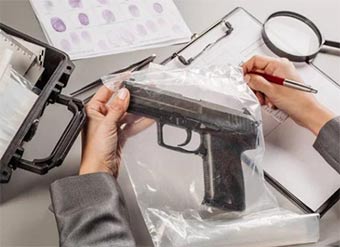
Your defense attorney can investigate whether the alleged firearm was properly identified and preserved. Questions can arise regarding operability, testing, chain of custody, fingerprints, DNA, photographs, and other forensic evidence. The prosecution cannot simply rely on an unsupported assumption that an object was a qualifying firearm. A skilled lawyer can challenge the evidence when the statutory definition is not satisfied.
Witness identification is particularly important in menacing and firearm-use cases. Your lawyer can examine lighting, distance, visibility, inconsistencies, prior statements, and the witness’s ability to identify the defendant. The defense can challenge conflicting testimony about whether a firearm was displayed, possessed, or used. Credibility issues create reasonable doubt.
Not every successful defense results in a trial victory. An quality defense attorney will find weaknesses in the prosecution’s evidence to negotiate a reduced charge. Depending on the circumstances, negotiations may involve dismissal, a misdemeanor resolution, or a lower-level felony. The strength of the defense evidence can significantly affect those negotiations.
Gun charges in New York threaten your freedom, criminal record, employment, and future opportunities. An arrest does not mean the prosecution can prove every element of the alleged offense. An experienced criminal defense lawyer can examine the legality of a search, police conduct, firearm identification, possession evidence, licensing requirements, and the circumstances of your arrest. This review can help identify weaknesses in the prosecution’s case and determine whether dismissal, suppression of evidence, acquittal, or a favorable plea agreement may be possible.
Every gun charge case presents different legal challenges. Contact the Law Offices of Michael S. Discioarro today to discuss your case with an experienced and aggressive criminal defense attorney. Call 917-519-8417 to protect your rights and explore your legal defense options.

A gun arrest can result in misdemeanor or felony charges, depending on the circumstances. New York Penal Law Article 265 contains numerous firearm offenses, including criminal possession, criminal use, sale, and location-based offenses. A defense lawyer should review the arrest paperwork and evidence before determining your potential exposure.
Yes, prosecutors can allege constructive possession even when the firearm was not found directly on you. The prosecution may attempt to establish that you knew about the firearm and exercised control over it. The defense can challenge those allegations when the evidence does not establish knowledge or control.
The location of the firearm does not automatically establish criminal possession. Police and prosecutors may examine who owned the vehicle, who controlled the area containing the firearm, and whether other people had access. A criminal defense lawyer will investigate if the vehicle search was lawful.
A firearm found inside your home can create significant legal issues, but the circumstances remain important. Prosecutors may rely on possession principles and statutory presumptions in certain situations. Your lawyer should determine whether you knew about the firearm and whether police legally entered and searched the home.
Police generally need a legally recognized basis to conduct a warrantless search. Exceptions can include consent, exigent circumstances, and certain other circumstances recognized by law. If the search violated constitutional protections, your lawyer may seek suppression of the firearm and related evidence.
A prior felony conviction will significantly affect a New York firearm case. Certain possession circumstances involving prior convictions elevate the offense to a more serious felony.
New York uses several statutes that can apply when someone with a prior conviction possesses a firearm. The applicable offense depends on the person’s criminal history and the circumstances surrounding possession.
You can still face serious charges even when nobody was shot. Depending on the circumstances, prosecutors can allege menacing, criminal possession, criminal use of a firearm, or other offenses. The specific conduct and intent alleged by prosecutors will determine the appropriate defenses.
Menacing offenses apply when a person intentionally places another person in reasonable fear of physical injury, serious physical injury, or death. Your lawyer can challenge whether the prosecution can prove the required intent, conduct, and reasonable fear.
An experienced gun crimes defense lawyer can challenge the search, seizure, arrest, identification, possession evidence, firearm evidence, and prosecution’s interpretation of the facts. Your defense attorney will seek dismissal, suppression, acquittal, or a negotiated reduction in charges. New York’s firearm statutes are extensive, so your lawyer will need to analyze the exact Penal Law section charged rather than relying on the general label “gun crime.”